‘We deserve to be happy and enjoy our lives’
KGS teacher shares how her experience fuelled advocacy for Scotland’s deafblind community
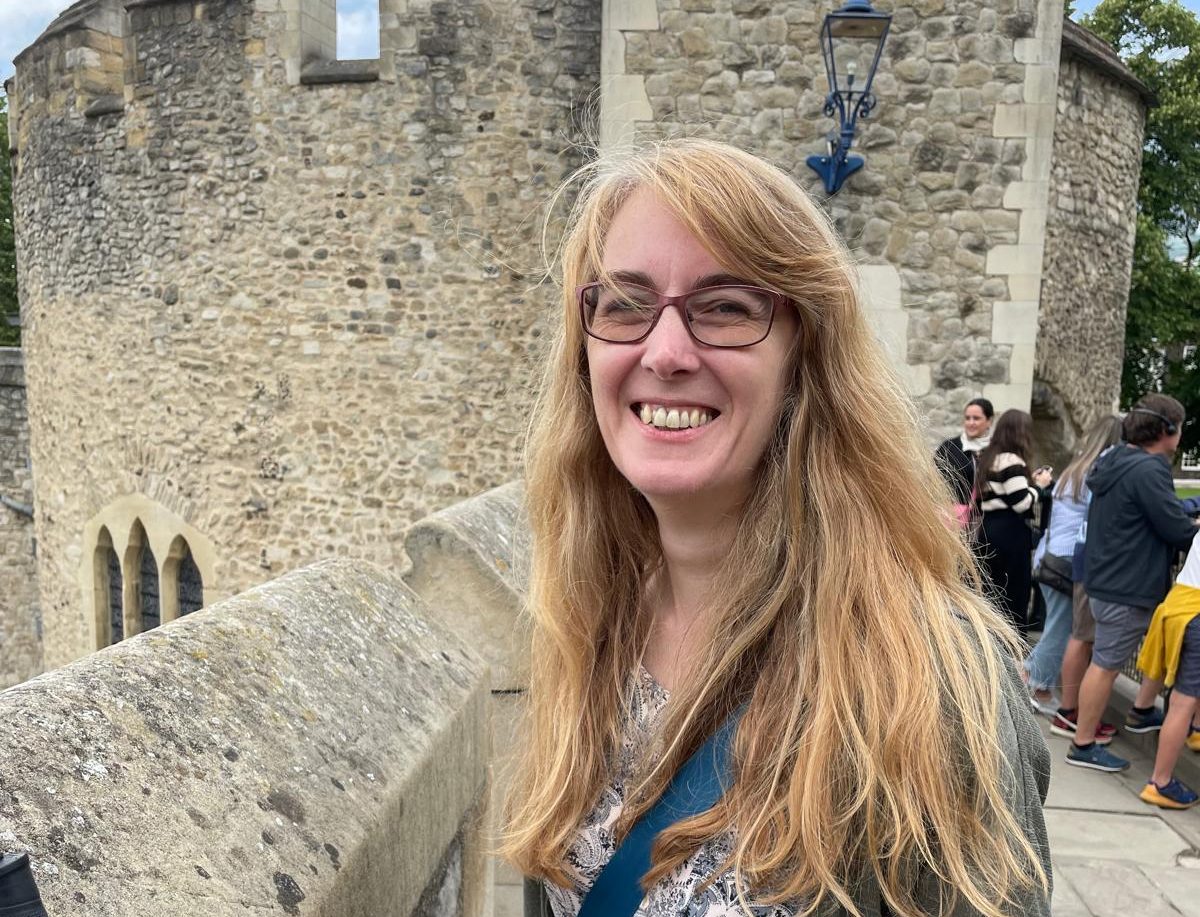
A Kirkwall Grammar School teacher who was born deaf and later began to lose her sight has shared how her experience pushed her to become an advocate for the deafblind community.
Julie Ferguson was dignosed with Usher Syndrome — a rare genetic disorder which causes vision loss, hearing loss and, sometimes, balance issues — at the age of 21.
“I was devastated,” she recalled, sharing her experience with The Orcadian in a bid to highlight the impact that both hearing and vision loss can have.
“As a deaf person, going blind was my worst nightmare. I relied on my eyesight for so many things!”
Julie, who originally hails from Falkirk, feels there was little to no support offered when she was first diagnosed, and there was a dearth of information about how this incurable condition would affect her as it progressed.
Now a trustee for national charity Deafblind Scotland, the biology and chemistry teacher continues to stress how important support is for the deafblind community.
“Without support, we can’t access aspects of daily life,” she explained.
“We might struggle to cook, to meet friends, to go to school or further education, to find jobs.
“A lot of deafblind people I know can’t find jobs, but they’re well educated and capable people.
“Being deafblind can be incredibly isolating, and that leads to poor physical and mental health. If you don’t feel able to leave the house for a walk because your balance isn’t great, or it’s difficult to use a white cane, and you’ve been on the guide dog waiting list for several years, how do you get exercise and meet your friends?
“If you feel trapped at home or can’t do things you used to be able to do, it can be really depressing.
“Support helps you to get out, try new things, learn to do old things in a new way. We deserve to be happy and to enjoy our lives.”

Julie has worked at KGS since moving to Orkney 19 years ago and has found it to be an incredibly supportive work environment.
“In my work, as my disability has become worse, my support has increased,” she said.
“I’m very happy working at KGS and my science colleagues are really supportive. Erland, my department head, tries to anticipate potential problems and suggest solutions, and I can go to him for help any time.
“On a whole-school basis, the senior management team ensures that I can access training, both in terms of using audio equipment which they bought for me, and giving me power points, slides and other information ahead of time.
“I’ve always found my pupils to be willing to help me and be patient, even when they’re repeating themselves for the third time!”
Julie still faces many challenges being deafblind in Orkney.
She explained that changes to street layouts such as those made several years ago on Broad Street can present an issue.
There, the pavements were lowered to the same level as the road, meaning there is no tactile difference between the two, which Julie suggests can pose a danger to deafblind members of the community.
Indeed, she claims there have been instances where she has walked out in front of traffic due to not knowing that she was already on the road.
Finding work or social groups is also a challenge to many members of the deafblind community and, as Julie is unable to drive, she is often limited by relying on bus services or paying out for taxis.
In Orkney, Julie feels like there are strong support lines through the NHS, OIC social work and local support groups like the Visually Impaired People’s (VIP) Club, as well as the general support of people in the community.
Julie enjoys crafts such as knitting, lace making and embroidery. She plays the piano with Hazel Wrigley, and often enjoys visiting For Art’s Sake in Bridge Street, where she can learn new crafts, and meet new friends.
“For a lot of people, I’m the first deafblind person they’ve met,” she said.
“People know how they might help a blind person or a deaf person, but deafblindness is an entirely separate condition. Most people don’t realise how dual sensory loss impacts the way support can be given.
“Take older people being assessed for dementia — there are no tools that take into account communicating with someone who is struggling to hear the questions or see prompt cards. In care homes, is that person actually a quiet person or are they struggling to join in because nobody’s realised that they need a hearing aid or they’ve developed macular degeneration?”
In her work with Deafblind Scotland, Julie advocates appropriate support to be made available for deafblind people in Scotland.
She became a trustee after joining a cross-party working group on deafness at Holyrood, representing her union, the Educational Institute of Scotland.
A deafblind subgroup was then formed, which Julie co-chaired alongside Annabelle Ewing, MSP. The focus of the subgroup was to get a formal definition for deafblindness adopted in Scotland, which was adopted in June, last year.
Julie emphasises that any type of sensory loss is a challenge, and feels that her own experience struggling to access simple support have fuelled her advocacy.
She said: “The more people from Orkney and other islands and rural Scotland talk to Deafblind Scotland, the more support will move out of the central belt to the other places that need it.
“Deafblind Scotland also campaigns at Holyrood to improve support for deafblind people in health, social care, education, access to communication support, and more, and engaging with Deafblind Scotland means that we can influence the big picture better.”