
CCTV and warning signs in £130k barriers safety drive
New measures are being taken to improve safety and lower stress levels for motorists planning to use the Churchill Barriers in stormy weather.
From next year, they will be able to access live, round-the-clock, YouTube feeds of the section of the A961 which links the Mainland with South Ronaldsay.
Warning signs near the entrance to Highland Park Distillery, and at the top of St Margaret’s Hope are meanwhile to be remotely activated to reflect the latest conditions.
The £130,000 scheme was unanimously welcomed at Tuesday’s meeting of Orkney Islands Council’s policy and resources committee.
While supporting the moves, Councillors Gillian Skuse and Owen Tierney made a plea for a warning sign to be put up at Burray.
The cost of installing CCTV cameras and the upgraded signs is being funded by Transport Scotland’s flood resilience support programme.
Roads and grounds service manager Matthew Wylie said that as well as improving safety and giving road users more up-to-date information, the measures will also cut the time council staff and police require to spend on manually monitoring conditions.
It will, he said, enhance operational decision-making during severe weather, reduce costly and time-consuming call-outs.
Mr Wylie said 117 hours were spent by the council’s roads crew monitoring the barriers during 2025/26.
The new developments, he said, would free them to devote more time to other tasks and would also lift staff morale.
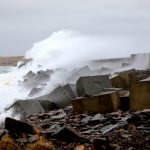
The Barriers, especially Number Two, can be affected by high winds and wave overtopping, creating hazardous conditions for road users.
Alerts are issued when easterly to south-easterly winds exceed 25mph or westerly winds exceed 40mph, or a flood warning is in place.
This triggers a joint OIC/police review of whether or not to close the road. Regular reviews are also undertaken during certain tidal conditions.
Conditions have been relatively benign over the past two years with the Barriers closed on five occasions for a total of 18 hours during 2025/26 and not at all the previous year.
But on the previous two years, they were shut respectively nine and seven times, for 45 and 29 hours.
Mr Wylie said the figures also mask the level of monitoring by the council and police personnel, who over the past five years have undertaken an average of 91 reviews of road conditions on the Barriers.
He said the council aims to place a contract to have the work carried out early in 2027.
Responding to Councillor James Moar, infrastructure and organisational development director Lorna Richardson said closures of the Barriers would continue to be manned.
She said: “This is to about monitoring and providing additional information to members of the public who might want to check weather conditions before they choose to leave the house.
“There will be no changes to the systems in place when we close the barriers. Staff will be there from the point of closure to re-opening.”
Councillor Leslie Manson questioned whether thought has been given to deploying snow-gates, which are used in parts of the Highlands.
Mr Wylie reiterated that the current scheme is focused on the monitoring regime.
He said the CCTV system being deployed at the north end of Barrier Two is similar to that successfully deployed in the Western Isles on the Braighe Road and the Baleshare Causeway.
Councillor Skuse said a warning sign on the Burray side would be very helpful to local people.
Councillor Tierney said it would make sense to relocate the sign from Glimps Holm, which he believed is “pretty pointless.”
“Repositioning it on Burray would save folk going on to Glimps Holm and having to turn on a small island,” he added.
Mr Wylie said the sign on Glimps Holm is the last visible point for drivers approaching the Barriers.
He said it would consider putting up an extra sign at Burray if the scheme is deemed in a success.
Councillor Skuse, who represents East Mainland, South Ronaldsay and Burray, said local people are very keen to see the scheme proceed.
She added: “The ultimate aim is to get the Barriers fixed. This is just a first step.”
OIC deputy leader Sandy Cowie said: “As somebody who crosses the Barriers very, very frequently, I certainly welcome this.
“It will be a great advantage to see what conditions are like before they leave home.
“I’m also pleased to see that it’s been externally funded. I’m always happy to use somebody else’s money.”