
What are the views on fixed links?

Fixed links will be on the agenda for Heather Woodbridge, as she is set to speak at a hearing on bridges, tunnels and other connections.
The leader of Orkney Islands Council (OIC) will be giving evidence to the UK Government’s Scottish Affairs Committee on May 20.
The committee is examining which communities, if any, would benefit from connections like bridges and tunnels – and what role the UK Government could have in supporting these.
Some locals have already voiced support for fixed links in writing to the inquiry, which was first announced in October last year.
As Shetland Islands Council continues to investigate tunnels, OIC’s efforts have focused on replacing the ageing ferry network.
But last year, The Orcadian revealed that OIC’s marine services department had spent almost £20,000 on early-stage fixed link studies — without informing councillors or senior officials.
One report, from 2021, explored a connection between Rousay and Egilsay, estimated at costing £26.6 million and potentially rising to £40 million.
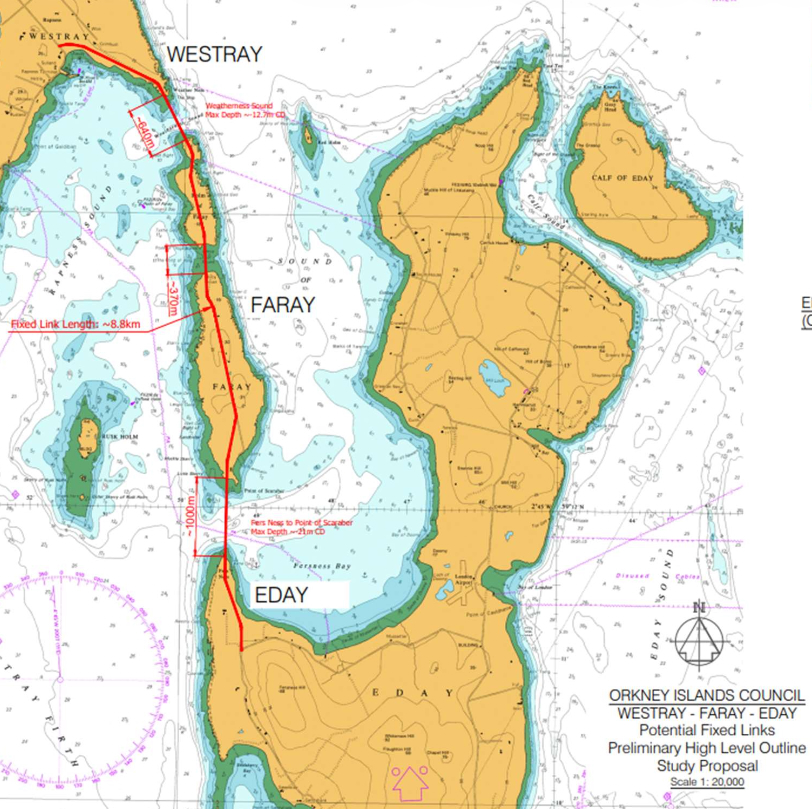
Another study in 2022 examined how a network of bridges could join Eday, Faray, and Westray. The price tag for this was between £175 million and £200 million.
These two proposals have been mooted again in some of the written evidence to the Scottish Affairs Committee inquiry.
Regional transport partnership, Highlands and Islands Transport Partnership (HITRANS), says it advocates for “targeted fixed links” focusing on where they can relieve pressure on ferry services, offer “transformational benefits”, and have the support of the community.
A Rousay-Egilsay connection is given as one such example.
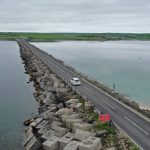
Neil Kermode, former managing director of European Marine Energy Centre (EMEC), outlines his thoughts on the subject, which follows over 30 years of studying the history and impact of the Churchill Barriers.
He says that Burray and South Ronaldsay are the two notable exceptions to population decline experienced by Orkney’s outer isles.
Mr Kermode, a chartered civil engineer, details the various impacts that linking Eday and Westray, via Faray, could have.
The use of low bridges is “generally an under-considered option”, the ex-EMEC boss states.
“Such structures do not need to be grandiose but could provide interconnection comparatively cheaply.”
As well as alternatives to fixed links — like considering catamarans over monohull vessels for inter-island ferries — Mr Kermode also describes the role he thinks tidal energy devices could have, if incorporated into fixed links like bridges or causeways.
Rupert Joy, custodian of a house in Eday, says fixed links in Orkney have “far too long been dismissed as a distraction”, without detailed studies being undertaken.
An Eday-Faray-Westray link could “help to stabilise the populations of the two islands,” with a single ferry, airport, medical practice, and school.
Mr Joy also believes such a connection would help OIC in its plans to build a windfarm in Faray.
Dr Walter Cormack has written that it is “impossible to see” how Eday’s depopulation will be halted, without a fixed link.
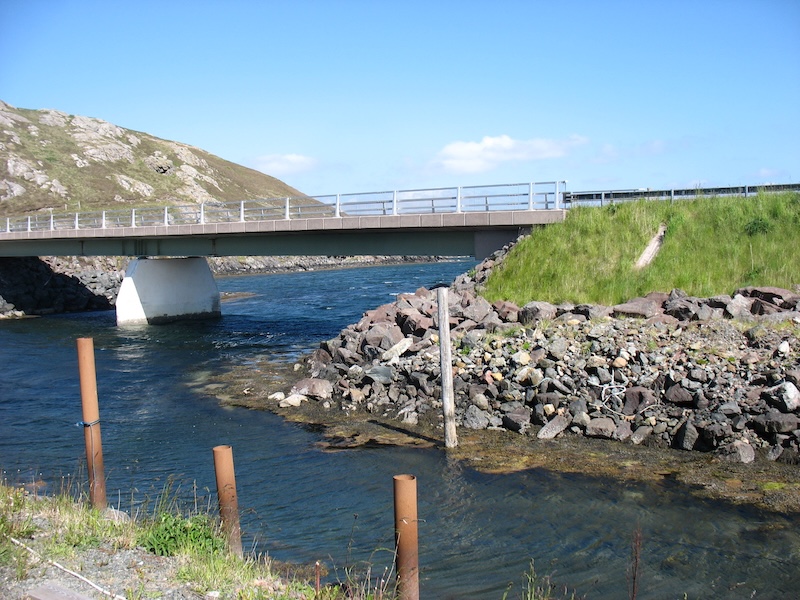
He believes the South Uist-to-Eriksay causeway completed in 2001, sets a precedent of how connections like these could work in Orkney.
“My experience of major projects is that if there is a clear business case, the funding problem will eventually get solved, but if no business case is prepared it never will,” Dr Cormack continues.