“Nothing like it has been seen before” at the Ness of Brodgar

A potential “new chapter” for the Ness of Brodgar has been unveiled at the Time Team world premiere at the Orkney Theatre.
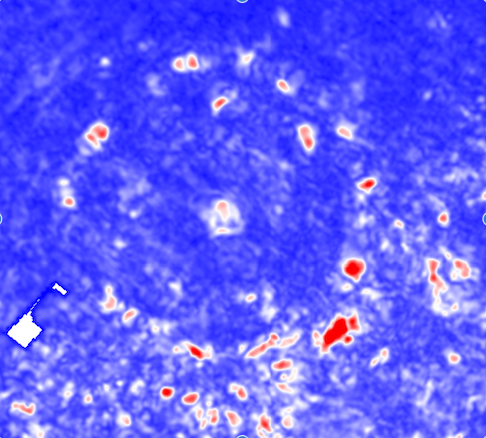
Described only as an ‘anomaly’ until now, recent geophysical surveys have uncovered an exciting new feature, which has the potential to change the way we think about the ancient site.
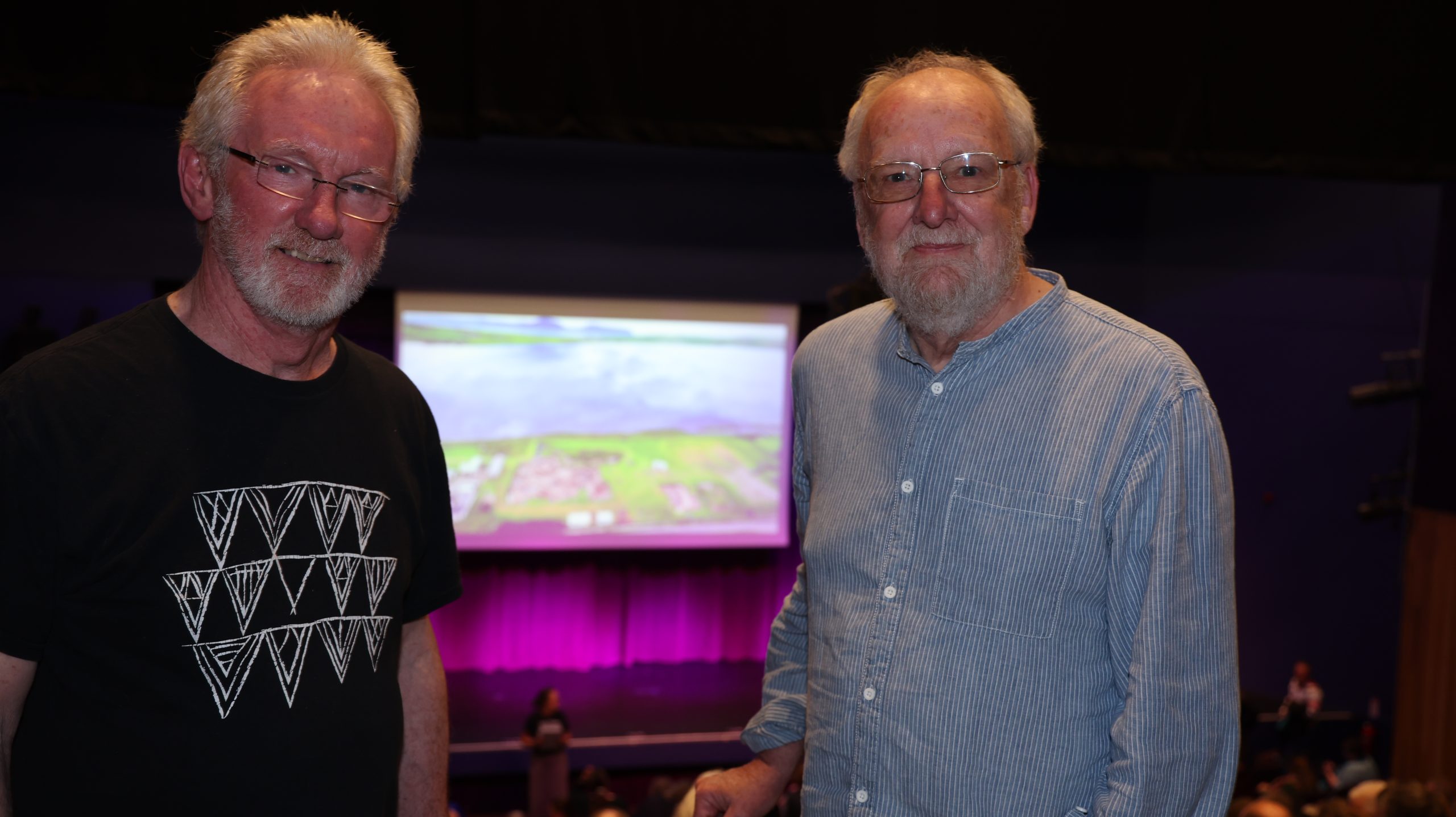
Though we can not be certain about what the anomaly is until it is excavated, Dr John Gater, who is one of the original Time Team members, and Geophysics Expect, is optimistic.
The circular anomaly hints at possible stone settings around the edge, with a larger feature in the centre.
“There’s a slight risk — it could be a garden folly, it could be a World War 2 gun emplacement. But to be honest, I hope it is archaeological, and it could be — I don’t know… a bronze age burial, it could be in our wildest dreams a stone circle.
“But until we dig it, we don’t know — but because it’s so well-defined, it’s detached from the complex Neolithic buildings, talking to Nick Card and Mark Edmonds and Ann at the Ness, they’re confident that a four week excavation will resolve what it is.”
The news was announced as part of the Time Time World Premiere, where the documentary filmed during the final year of excavation in 2024 was shown for the first time at the Orkney Theatre. The documentary is now available to Time Team’s patreon subscribers, and will air on July 18 to the wider public.
The Ness team will begin a small, targeted excavation a few days later, to investigate the new anomaly and determine the truth of what lies beneath the ground, alongside Time Team, who have funded the excavation though public crowd funding.
John explained, “It’s the high-definition radar that’s mapped the neolithic buildings that haven’t been dug, but then came up with this anomaly — this circular feature outside the main complex, and this is what’s so exciting. Nothing like it has been seen before.”
The Ness of Brodgar — one of Orkney’s most famous archaeological sites, hosts a huge complex of monumental Neolithic buildings from the centuries around 3000 BC. Only around ten per cent of the site has been excavated.
The archaeological excavations ended in 2024 after 20 years of fieldwork, to preserve the momentous site for future generations to come, but this new discovery by Time Team’s geophysical surveys was worth temporarily reopening the site.
Nick Card, Director of the Ness of Brodgar, said: “We’ve done geophysics across the sites for many years, as techniques and technology improved. And well, in fact, geophysics is what led to the discovery of the site originary, but it’s some of the new technology that we used last year, the ground penetrating radar, which is just amazing piece of kit where we managed to collect two billion data points in 3 days and cover the whole site in very huge detail, which will hopefully give this kind of 3D imagery of what lies below.
“There was just one particular anomaly which hadn’t shown up in any of the geophysics we’d done before, and it just seemed to be at odds with everything else on site.
“It was quite a small and discrete anomaly, so it’s something that we felt we could deal with in a relatively short period of time, four weeks, but I think it’s important to investigate it, because I think it could add another dimension — another chapter to everything that we’ve uncovered over the last 20 years.”
With a diameter of about eight metres, the circular anomaly lies to the north-west of former Trenches J and T, beneath the area used for vehicle access and parking in previous years.
The four-week exploratory dig will see a 14 x 12 metre trench opened over the feature to clarify what it represents and how it relates, if at all, to the previously excavated archaeology.
John told The Orcadian that he first learnt of the new discovery in the Ferry Inn in Stromness, when a couple of his colleagues came to show him the results over a pint. They had hidden the anomaly under a piece of tape on the screen, so they could do a grand reveal when showing him the results.
“The thing is we knew the neolithic buildings were there,” John emphasised, “so it was fantastic to map them and see the detail going down two metres. Then they took off the piece of tape and there was this ring feature outside of the main complex, and I was just blown away because of what it might be. The fact it’s so different to everything else on the Ness is quite remarkable.
“The trouble with geophysics until you dig it, you can’t be 100 per cent sure, and in the past, we have got our interpretations wrong.”

Regardless of if the anomaly is a stone circle or a WW2 gun emplacement, this excavation will be an important slice in the larger picture of the site.
“It could give a whole new chapter to the story of the Ness,” emphasised John, “and that’s why it’s important to do. It’s unlike anything else that’s been seen at the Ness in the past 20 years.
“It may be from a different date period which is important, and if it turns out to be a burial — is that because the ground was recognised as being important in the past?
“It’s going to give us something new about the archaeology that we haven’t seen before at the Ness and that’s what’s so exciting.”
Nick is optimistic that the excavation will shed light on the anomaly, and emphasised that until it is excavated, we can only speculate on what the feature may be.
Nick explained, “Whatever it is, it’s just so different from everything else that we’ve excavated.
“It should add a very important new dimension to our discoveries and help put that in context, but also kind of link up with what was previously excavated to the next phase of the work.
“But it’s the post excavation process that we’re very busy with just now — writing up all the results and doing all the scientific analysis and finds from the last 20 years. This will just start that a little bit extra to the overall history — the story of the Ness.”
The archaeological excavation is often the shortest aspect of an archaeological dig, with post excavation often being a lengthy and expensive part of the process. Soil samples need to be analysed, finds catalogued, and reports written up before the final findings of an excavation can be published. This is primarily funded at the Ness of Brodgar through public donations. Anyone who wishes to contribute can do so at www.nessofbrodgar.co.uk/donate/
The dig at the Ness of Brogdar will be open to the public every Monday to Friday between July 7 till July 30.