Councillors warned not to speak about chief’s ‘special leave’

Orkney Islands Council (OIC) and its councillors have doubled down on their refusal to engage with the press and public on the situation at the helm of the local authority.
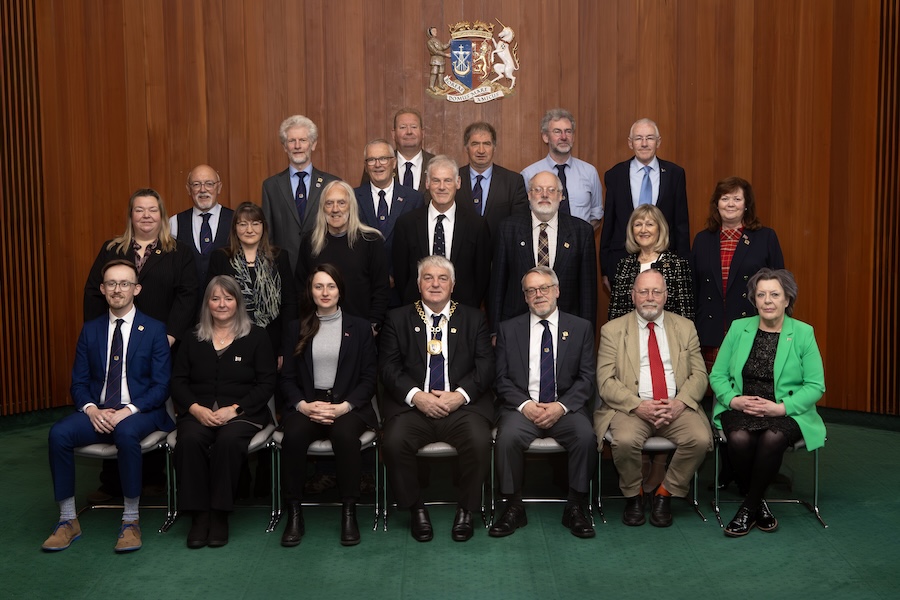
All but one of the 21 islands councillors have declined to comment this week, after being warned not to speak about the sudden and ongoing absence of OIC’s chief executive, Oliver Reid.
Meanwhile, council communications has begun referring press enquiries to the authority’s lengthy Freedom of Information process.
A request for an interview to both the council leader Councillor Heather Woodbridge and deputy leader Councillor Sandy Cowie has also fallen on deaf ears.
This came after The Orcadian sought to break the silence which has enveloped School Place by contacting all elected members directly — barring councillors Woodbridge and Cowie.
Elected members have been told not to speak to anyone about Mr Reid’s absence, which began over seven weeks ago.
They are not being given the full picture about this. It is understood that this may be in case they are asked to sit on a panel to make a decision on any complaints surrounding Mr Reid.
Understanding OIC’s duty of care to its employee, The Orcadian did not seek to know any details relating to Mr Reid’s “special leave” or the reasons behind it.
Instead, the newspaper asked councillors’ views on the handling of the wider situation by the authority, the temporary leadership arrangements, and whether they feel they have received enough information about what is going on.
At the time of The Orcadian going to press, just three of the 21 councillors had replied to the request – two refusing to comment on the matter.
The newspaper has heard that a meeting took place on Monday morning where councillors were advised against speaking to the media.
Of the three who did reply, Kirkwall East councillor David Dawson, followed by North Isles councillor Stephen Clackson issued identical statements, both stating that the matter is considered to be an “internal staff issue” and they could make no further comment.
Councillor John Ross Scott — a previous advocate for more openness and transparency within local government — was willing to explain why he believes the interim system of rotational chief executives can work.
“I have every faith in our four lead officers at Orkney Islands Council who are experienced and used to working collaboratively,” said Councillor Scott, who had been out of Orkney for the past two weeks.
“As far as I am aware they have been meeting regularly together every week to ensure continuity.
“I have extensive knowledge in this type of situation and have been involved with several public bodies where it has been common practice for other directors to step in to run the show during the absence of a chief executive.”

COUNCILLORS SILENCED?
In light of the scarcity of responses from those elected to School Place, and the reports of a meeting taking place on Monday morning, The Orcadian asked OIC if elected members had been told not to respond to us.
In an unusual move, the council has gone from refusing to comment, to claiming our query is a Freedom of Information (FOl) request — rather than a typical press enquiry.
FOI law means that the authority can take 20 working days before it responds.
Could our apparently straightforward questions actually have complex answers?
Carole Ewart, director of the Campaign for Freedom of Information in Scotland, wonders if this could be the case.
She said: “Media requests should be part of the ‘business as usual’ interaction between a public authority and journalists on matters of public interest as the public need to access information to form an opinion.
“The council has chosen to process the requests under the 2002 legislation, which may suggest the simple questions actually need complex answers.”
Despite having up to 20 working days to respond, there is also a legal duty to respond promptly, Ms Ewart explained.
She said that opinion polling in Scotland proves that a public authority which shares a lot of information about its work increases public trust.
“That is key to ensuring a resilient democracy locally and nationally,” Ms Ewart added.
‘CANNOT CONFIRM OR DENY’
The wait for answers comes after a tumultuous week for the authority, with an intense spotlight placed on those at the head of OIC.
Attempts made by local press to shed more light on the situation at the head of decision-making at School Place have been consistently stonewalled since news of Mr Reid’s shock period of “special leave” was announced on Monday, May 25.
National headlines were made after OIC claimed it “cannot confirm or deny” reports that Mr Reid had been suspended pending disciplinary investigations.
Last week, The Orcadian reported that OIC was investigating complaints surrounding its top official, with many saying they knew of no concerns about his performance.
We also revealed internal emails which painted a picture of an authority desperate to limit any public discussion on its leadership.
It appears that the lack of response from councillors is in line with the culture of the current council — an issue which this newspaper called out last week.
Media training documents obtained by The Orcadian state: “OIC must have one voice – internal conflicts don’t play out well in the media and don’t reflect well on the council.”
Meanwhile, the newspaper has been told that there has been disquiet at School Place over the lack of information councillors are being given about the situation.
It is understood that elected members have been told that they are being kept in the dark in case they are asked to sit on a panel as part of any future proceedings involving Mr Reid.
Before this happens, an investigation would have to be carried out and completed.
National guidance provides the framework for this process and dictates that the probe must be carried out by a body independent of both the council or the chief executive.
There has been no information from School Place about who is doing the investigation, though last year we reported on how the authority had spent over £90,000 on investigations led by law firms since 2023.

‘FULL CONFIDENCE’
In a statement issued after extensive local coverage last Wednesday, the authority doubled down on the interim arrangements in place.
Gareth Waterson is currently the deputising chief executive, with James Wylie taking on the role before him.
In August, health and social care boss Stephen Brown will run the authority, and by September it will be the turn of Lorna Richardson — OIC’s newest director:
A professor of management, Richard Kerley, has previously told The Orcadian that he thought the rotating system could create problems for the authority, like a lack of continuity.
Meanwhile, OIC said the interim arrangements will “continue for as long as is needed” and any changes will be communicated “as and when they happen.”
“The chief executive remains on special leave,” the statement continued.
“In the interim, the council’s corporate directors are undertaking the role of deputising chief executive on a monthly rotational basis to ensure all council commitments are met and business continues to run as usual.”
The council added: “It has been reported in the local media that the chief executive ‘has been suspended for the last six weeks due to a disciplinary process.
“The council is unable to confirm or deny this as the chief executive’s special leave is an individual staffing matter.
“On legal advice, the council does not comment on individual staffing matters.”
In a statement issued by OIC’s communications team, Councillor Heather Woodbridge said: “As leader of the council, I have full confidence in our senior officer team.
“The suitability of interim arrangements put in place are regularly reviewed and will last for as long as is necessary.”