Cruising in Orkney — time to spend a penny?

Orkney has a toilet problem that we “can’t just sweep under the carpet” — and it’s leading to “embarrassing incidents” aboard coach tours and at historic sites.
The lack of loos at some of our highest profile attractions is never far from the headlines, and it’s not the only infrastructural challenge our community has faced in the wake of the cruise boom
Is planning bureaucracy hampering progress? Should we charging more for liners to come here to fund necessary improvements?
Read and watch more from our Cruising in Orkney series.
These were just some of the questions on our minds, as The Orcadian headed out to the Ring of Brodgar on Tuesday, last week.
That morning brought the arrival of the 4,450-passenger Majestic Princess at Hatston and the 148-passenger National Geographic Explorer in Stromness — a time when our capacity to give everyone the best Orkney welcome is put to the test.
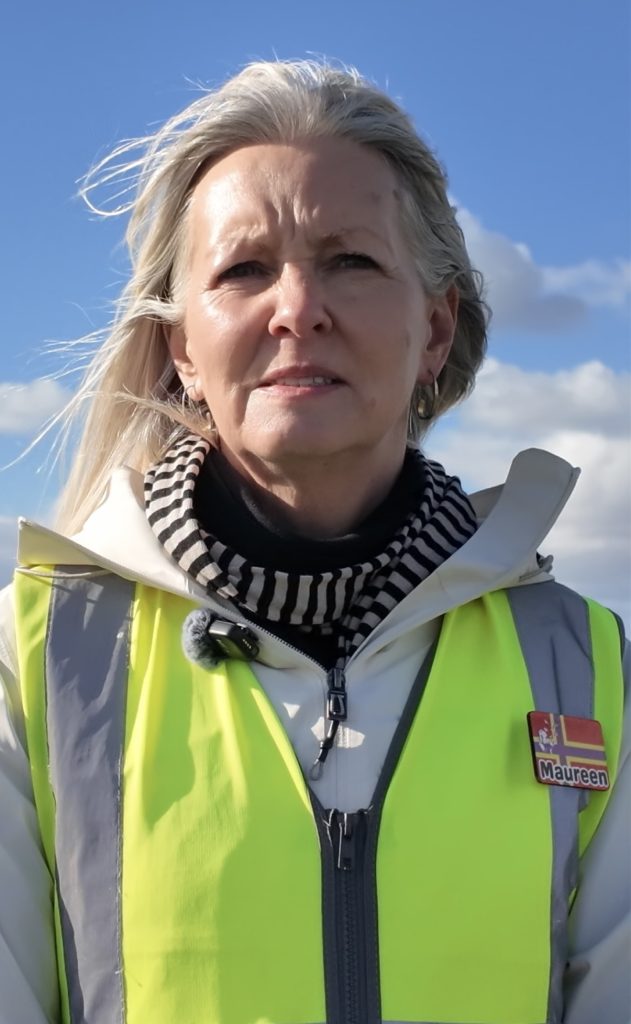
“I’m pretty impressed by how well it works,” said Maureen Shearer, one of a number of Orkney guides hired by coach company Maynes to conduct cruise-booked tour packages.
“There was a mysterious smell on the bus”
— Maureen Shearer, tour guide
She and other guides we spoke to believe that many of the big issues around cruising have been dealt with, including new daily limits on cruise passenger numbers.
“Everything is so well co-ordinated on the pier in the mornings, and it’s pretty smooth — the gaps between the tours that are going round, everyone’s pretty well spaced out,” said Maureen, who was guiding a tour of 40-or-so visitors round the West Mainland, with stops at Brodgar, Stromness, Birsay, Evie and Firth.
“I think we are making a really good job of it.”
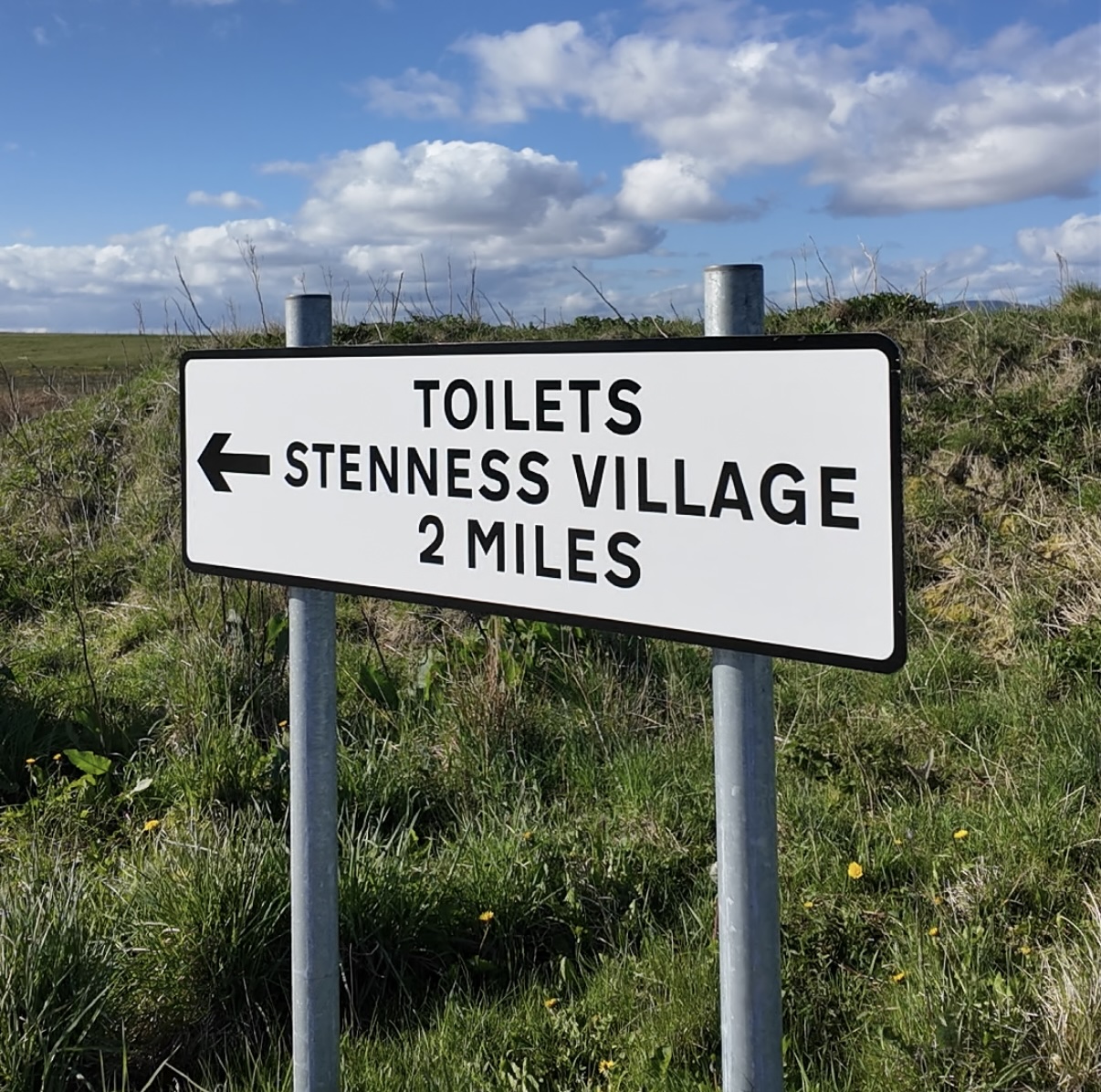
But there is still one “big sticking point”, say tour guides. As you roll up to the car park at Brodgar, there’s a sign pointing back down the road, pointing to the nearest public toilet — two miles away in the Stenness village. There may be other facilities at relatively nearby attractions, but The Orcadian was told that that these sites are understandably reluctant to have unscheduled coaches park up for a toilet stop.
“The one problem that lingers is the toilet problem,” added Maureen, who was actually approached by one of her charges hoping to use to loo as we spoke and said that “Brodgar is the “one place where you will always be asked”.
But aren’t there loos on the coaches?
“The toilets aren’t open on the buses, and it is because there is nowhere to empty them,” explained Maureen.
“All we ever seem to do is to talk about it or hear other people talking about it”
— Councillor Leslie Manson
“First cruise of the year here at Brodgar, there was a mysterious smell on the bus when we went back on and, of course, when we got back to Kirkwall we realised, yes, something had happened in the bus.
“We were on single tour that day, which was fine — but if we had had to be turning round again and going out on an afternoon tour we couldn’t have used it.
“The problems are real, and it’s not just happened with me.
“My personal opinion is just please, please provide somewhere to empty them — because the bus drivers would rather do that at the end of the day than have to deal with a dirty coach.”
Orkney Islands Council has been actively working for some time on a solution to Brodgar’s mucky issue — but the policy and resources committee heard, last month, that the Neolithic ring would go yet another busy season without facilities.
“All we ever seem to do is to talk about it or hear other people talking about it,” said a frustrated Councillor Leslie Manson, who also slammed an “insulting” offer of £4,000 towards the £100,000 estimated cost of the toilets from the Historic Environment Scotland, which manages the site.
“We don’t ever seem to be getting any closer to getting on and doing it.”
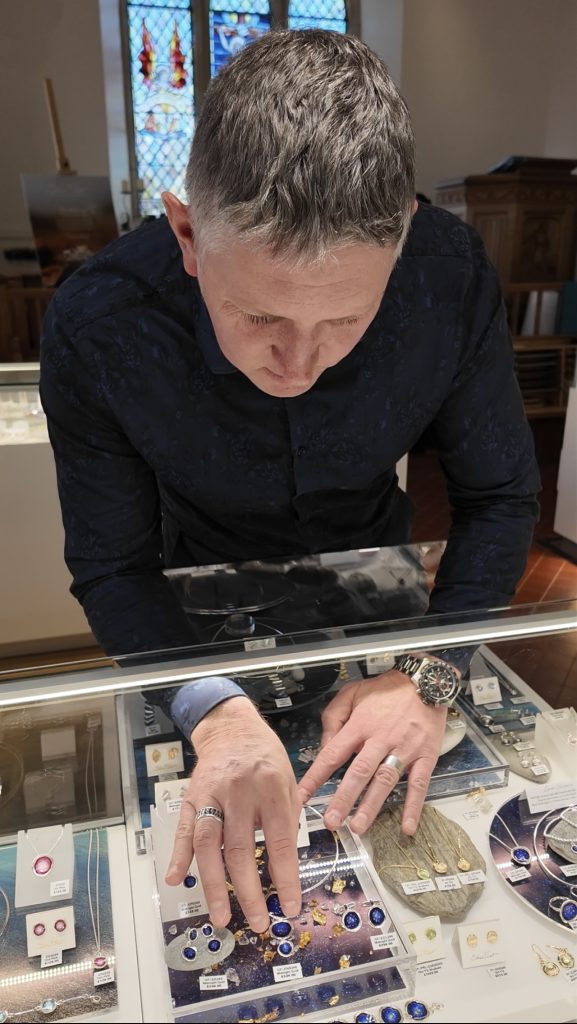
“I really don’t think an extra £2 would be too much”
— Martin Fleet, Destination Orkney
The Ring of Brodgar itself is part of Orkney’s sprawling UNESCO World Heritage Site. Beyond the issue of finance, council officials have confirmed that even putting temporary loos nearby is not straightforward, due to the area’s protected status.
But Orkney’s leading tourism body thinks it has a solution to the cash issue at the very least.
Destination Orkney represents over 210 members of the industry here, from retailers and attractions to accommodation providers and hospitality businesses.
Its chairman, Martin Fleet, is leading the charge for a point-of-entry levy — as an alternative to accommodation based levy legislation introduced by Scottish Government, which Orkney has turned down for now.
“It’s been quite divisive across the whole country, because one size does not fit all, and cruise doesn’t come under that current visitor levy,” he told The Orcadian.
“So we worked with the council, worked with our members, to look at a point-of-entry levy — because that’s something that would be a fair way of trying to raise funds to reinvest back in tourism infrastructure that would benefit the community as well, and support the pressure that council services may be under as well.”
Martin says he’s often asked visitors themselves whether they’d be willing to spare an extra fiver to help keep Orkney at its best and claims “everybody has said yes to it”.
As an interim, he feels that more leeway could be made by council to levy extra charges on cruise ships for the sake of investing in facilities. Historically, harbour dues have had to stay ring fenced within harbours — although that’s something the council has previously said it is working to find a loophole.
“I think they have they ability, if they’re brave enough to increase it by £1-2 — they mustn’t be feared it’s going to put people off,” said Martin, who runs the jewellery design business founded by his mother, Sheila Fleet.
“We have fantastic tour guides, attractions — we get really good feedback from that.
“But if we want to continue with that and the great welcome that we offer all our visitors, I really don’t think an extra £2 would be too much until we have a solution in a point-of-entry levy.”
Again, this is something that OIC says it is actively working on.
Its director of enterprise and resources, Gareth Waterson said that, with an estimated £12-15 million benefit to Orkney’s economy each year, being the nation’s cruise capital boosts retail, hospitality and tourism businesses — as well as helping fund the running costs of harbours.
“However, cruise tourism at this scale does bring its own pressures — on infrastructure, attractions and on our communities — and managing that growth sustainably is something the council takes seriously,” said Mr Waterson, who hailed recent efforts to “better manage” the size and frequency of vessels.
“We are also participating in the Environmental Port Index to reduce the environmental impact of ships in port, and are actively exploring the case for a cruise ship levy to fund future investment in visitor management and infrastructure.”