Devastating blow for stoat project as first sighting of species in outer isles confirmed

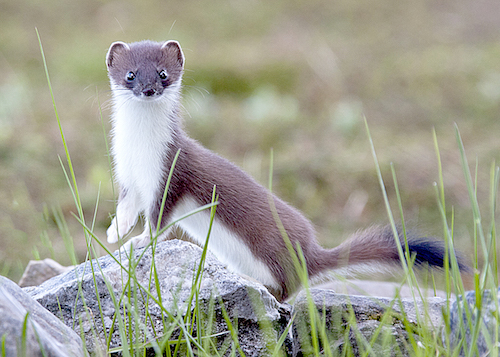
The first sighting of a stoat outside of the Mainland and Linked South Isles has been confirmed.
The presence of the invasive non-native species in Rousay has been described as “deeply concerning” — the first reported occasion of the animal in one of Orkney’s outer isles.
Stoats pose a major threat to Orkney’s internationally-renowned wildlife and ground nesting birds.
The mustelid was first reported in Orkney in 2010 and as they are are non-native, they have no natural predator in Orkney.
Since 2019, a multi-million pound project — the Orkney Native Wildlife Project (ONWP) — has been conducting a full eradication effort to rid Orkney of its stoat population.
This has included establishing a network of eradication traps across the Mainland and Linked South Isles, and biosecurity traps across those islands within a stoat’s swimming distance.
Stoats are excellent swimmers, known to be able to cross more than 3km over open water.
Up to now, these efforts, including the continued reported sightings from the public, the support of landowners and the diligence of community volunteers, have been successful in containing stoats.
However, the presence of stoats in Rousay will come as a huge blow to the partnership project, which is now intensifying efforts to catch the Rousay stoats and stop the spread.
Although the risk of stoats spreading by swimming should be decreasing as numbers on the Mainland decline, Rousay is within a distance a stoat could easily cover over open water, according to ONWP.
The project also said that it was possible that the stoat was accidentally transported to the island or that someone chose to break the law and release it.
Evidence of how a stoat came to be on Rousay may emerge over time but for now all efforts are focussed on finding and removing it, says ONWP.
A Rousay visitor first reported a potential stoat sighting in early April, prompting redoubling of response efforts, with dog searches, cameras and extra traps deployed.
Evidence of stoat scat was found and two images were then captured by a remote camera — confirming stoats were present on the island — a devastating blow for the project.
ONWP is now asking local residents and visitors to the island to be alert and report any possible stoat sightings immediately.
Project manager Sarah Sankey said: “The confirmation of a stoat on Rousay is deeply concerning news for the community, for nature and for Orkney as a whole.
“Even by Orkney’s high standards, Rousay is an important place for nature, particularly for breeding seabirds and birds of moorland, peatland and lochans like curlews, red-throated divers, hen harriers and short-eared owls. It’s also one of the nine islands in Orkney that is home to the Orkney vole — found nowhere else on earth.
“Thanks to the diligence of the visitors reporting that they may have seen a stoat, and fantastic support from local landowners and volunteers, we were able to respond quickly.
“We are now asking everyone to please report any potential sightings straight away to give us the best chance to find and remove this stoat.”