
Living life to the full after MS diagnosis

For Kirsten Bichan, being diagnosed with multiple sclerosis (MS) was a long and difficult journey, fraught with misdiagnosis, speculation and a catalogue of ailments.
A wife, mum and business owner, her symptoms became so bad that on one occasion she was forced to crawl into her home.
Speaking to The Orcadian during MS Week, she has shared her story not only to raise awareness of how complex a diagnosis of MS can be, but also to show how people can regain control of their life.
Six years after her diagnosis, ever-positive Kirsten is thriving and embracing life as a busy mum of three and a successful businesswoman, and living life to the full.
Her journey began with hip and joint pain, as well as fatigue, symptoms which were put down to sciatica and having children.
Eventually diagnosed with arthritis, Kirsten, from Kirkwall, was put on a variety of medications.
Kirsten, 40, explained: “For years and years I was told that I have arthritis. I got put on so much medication, and it was awful.
“It was horrendous, to the point I actually lost sight in my left eye, so I was blind in my left eye.
“I’m one of those people who just laughs it off, but then my face on my left hand side just dropped, and a lot of people said ‘have you had a stroke?’
“So they [the doctors] said I had Bell’s palsy.”
Next up was toothache. There was nothing wrong with her teeth but the severe chronic pain she was experiencing resulted in Kirsten pleading with dentists. Eventually, a healthy wisdom tooth was removed in a bid to alleviate her pain.
Mood swings became a big symptom for Kirsten. She was advised to have a hysterectomy to alleviate her symptoms, advice which she fortunately did not accept.
Walking became increasingly difficult and her balance declined, leading to trips and falls when out and about.
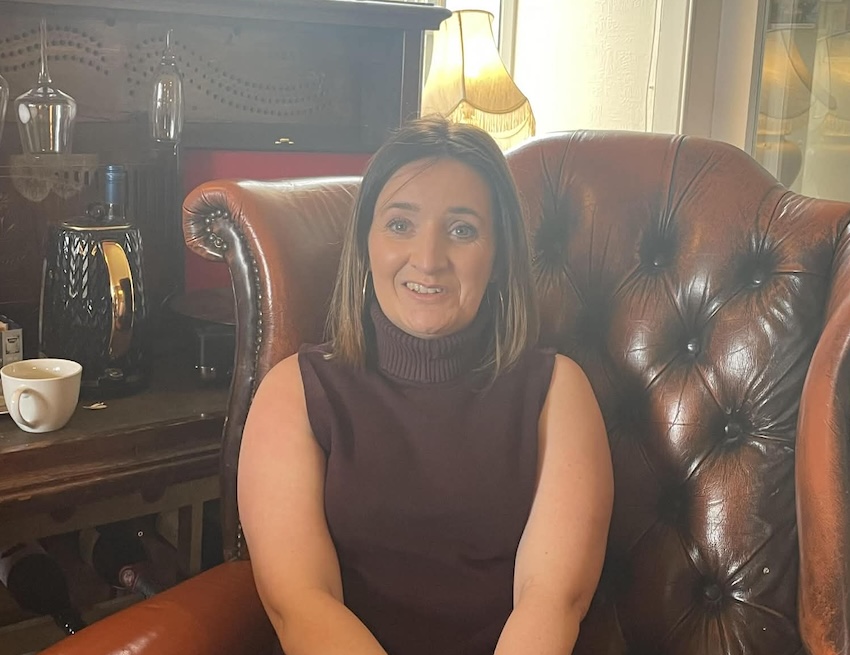
It was not until just before the COVID pandemic, in 2020, that her MS was discovered during an MRI for her suspected arthritis.
The diagnosis came as a double-edged sword. On one hand, Kirsten now knew what her symptoms were, and what caused them.
On the other hand, MS is a chronic neurological disorder with a reputation for life-changing impact.
Kirsten was diagnosed with Relapsing-Remitting MS (RRMS) — the most common type of MS. Around 85 per cent of people with MS are diagnosed with RRMS.
RRMS is a type of MS where you have relapses (symptoms getting worse) followed by recovery (or “remitting”).
Her diagnosis was a terrifying moment for a very vulnerable and emotional Kirsten, made infinitely harder by the public perception of MS, for which there is no cure.
“When I got diagnosed, I was on the street, and someone actually said ‘Oh my god, this is terrible, how long do you have to live?'”, she recalled.
“Back then I didn’t know much about it and now, I actually think it’s really sad that people have that assumption about MS, because it’s not that bad.”
As she came to terms with her diagnosis, Kirsten — who had always been outgoing — began to dread being out in public or meeting people due to folk expressing their sympathy.
Now, more than six years on, she is in an altogether different place, labelling the medication used to treat her MS as “an absolute game changer”.
Since being placed on dimethyl fumarate, which reduces the inflammation that causes damage in the brain and spinal cord of people with MS, Kirsten has had no relapses.
All her symptoms have been controlled, allowing her to regain control of her life. And, while she acknowledges the acutely individual nature of each person living with MS, for her, finding the correct medication has transformed her life.
“The difference is quite incredible. It was crazy — in fact one day I even had to crawl up my steps to go to my house. I was actually crawling up the steps, and I was so embarrassed.
“Thankfully now, with medication and things, having to crawl up stairs has never happened again. Medication has changed my life completely, it’s so nice.”
Kirsten continued: “At the time [of diagnosis], I thought my life was over — but now I’m still working, I’m still running my house, I’m helping the kids, I’m still doing everything that I’ve always done.
“The only thing that I can’t really do is long walks. I can’t really walk big mile walks or anything like that, but I never did that anyway.”
This new lease of life has helped Kirsten return to her bubbly positive self.
Today, she works as a beauty therapist, and runs a successful B&B and tour company, Shorelands Orkney, alongside husband Nicky.
The couple are also co-owners of Kirkwall guest house, The West End.
Despite a hectic schedule, being a mum of three beautiful children, and managing a chronic autoimmune condition, Kirsten’s positive outlook on MS and life has seen her being sought out by people as they undertake their own MS journey.
“I really like it”” said Kirsten. “I love that I can help people and tell them that it’s not as bad as what you think.”
She continued: “I absolutely love people coming to speak to me because they’ve been newly diagnosed.
“When I got diagnosed a few years ago, there was no one to speak to.
So that’s how much it’s changed already. It’s not a big deal to speak about anymore.”
The biggest thing Kirsten wants people to understand is that it’s often not as bad as what people expect.
MS can differ hugely for each individual, with no two people experiencing the same symptoms or severity.
A fear of the label of MS does not stop the symptoms or impact on your life. But that diagnosis and subsequent help and support can set you on the path to a better way to live, and in the case of Kirsten, transform your life.