Orkney dog duo joins stoat scheme
For the first time, dogs trained in Orkney are being used in the efforts to track down the county’s invasive stoat population.
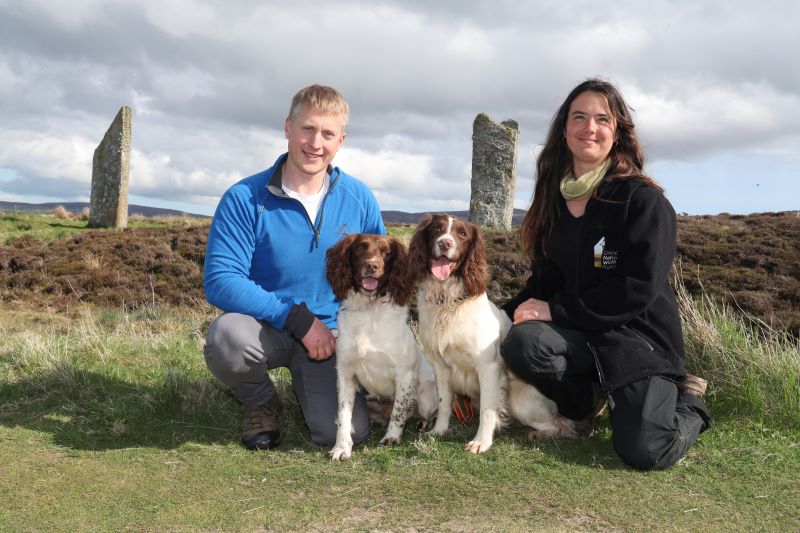
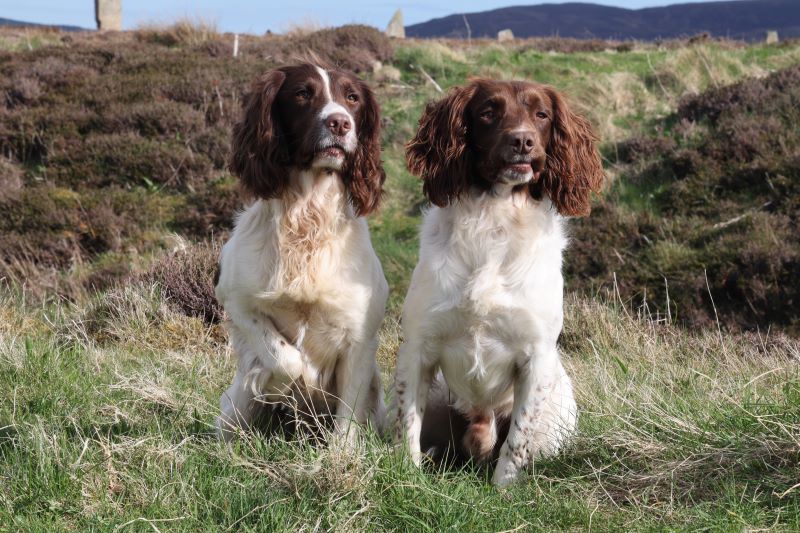
English Springer Spaniels Mambo and Spud have been specially taught to track the signs of stoats by Alan Clouston from K9 Detection Scotland.
The Orkney Native Wildlife Project uses the dogs to detect stoat scat, and help the trapping team to focus on the right places.
The newest additions to the dog team are the first locally-trained trackers to be used in the £16 million eradication effort.
Mr Clouston, whose business is based in Stenness, has been training dogs for 15 years. In 2024 he diversified from gundogs to teaching the spaniels to search for stoat scat.
The first dog, Mambo, joined the team earlier this year and is now fully operational.
Working closely with handler Roddy, he was searching for stoat scat in Burray earlier this week.
The next dog, Spud, will be handed over to the project later this month, with a third, called November, following soon after.
Mr Clouston explained: “I trained the dogs initially to be able to search the ground and use the ground and the wind to their favour.
“Once I’ve got the search pattern all correct, I’ll start to train them to indicate and once they’ve got the indication part of that, then I’ll merge the two together so that they’re searching the ground and indicating.
“They’re all trained on a common scent initially and then when they’re ready for operation they’re imprinted on the scent of the stoat scat itself.”
Mambo, who is homebred, was a fully trained dog before changing disciplines into the detection.
“He works really well and is very obedient,” said Mr Clouston, who is also very impressed with the bought-in Spud.
Bindu Peterhansl, one of the dog handlers for the Orkney Native Wildlife Project, was delighted to have the new members join the K9 team.
“We’ve had quite a few dogs here that have been on the project for a long time and are definitely due retirement so getting some new dogs in is really exciting,” she said.
“They’re very important — especially as the stoat numbers go down, it’s getting more and more essential that we pinpoint those last remaining hotspots and dogs are able to pick up the tiniest amount of scat in a massive landscape.
“Without them we would struggle to really understand how the stoats are using the landscape.”
The Orkney Native Wildlife Project — a partnership between RSPB Scotland, NatureScot and Orkney Islands Council — is undertaking the largest stoat eradication on an inhabited landscape anywhere in the world.
It aims to protect Orkney’s native wildlife by completely removing stoats, an invasive non-native predator that was first confirmed in Orkney in 2010.
Since the project began in 2019, more than 8,500 stoats have been removed.